
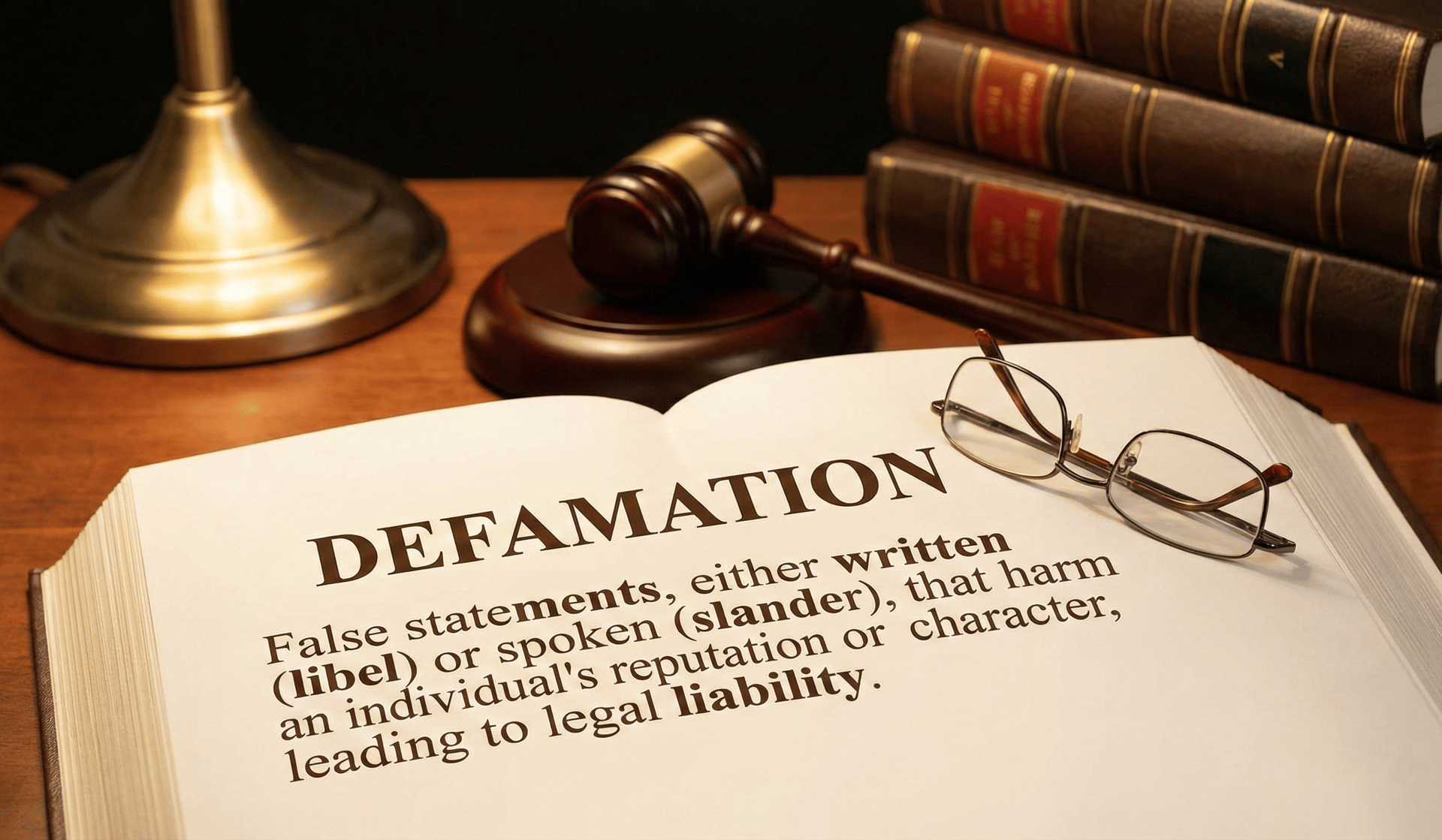
Defamation
What is Defamation?
Defamation occurs when a person makes or publishes a false statement about another person that harms their reputation in the eyes of others.
Defamation can be:
Libel – Written or published statements (including online content)
Slander – Spoken statements
Under Indian law, defamation is both a civil wrong (for compensation) and a criminal offence.
Step-by-Step Legal Process
1. Filing a Complaint
The affected person files a complaint before a Magistrate (defamation is usually a non-cognizable offence).
2. Court Takes Cognizance
The Magistrate reviews the complaint and may issue summons to the accused.
3. Evidence Submission
The complainant presents evidence such as written statements, recordings, or publications.
4. Trial Proceedings
Both parties present arguments and evidence before the court.
5. Examination of Witnesses
Witnesses may be examined and cross-examined.
6. Judgment
The court decides whether defamation has occurred and passes appropriate orders.
7. Appeal
The decision can be challenged in a higher court if required.
IPC Sections for Defamation
Under the Indian Penal Code (IPC):
Section 499 – Definition of defamation
Section 500 – Punishment for defamation
Section 501 – Printing defamatory material
Section 502 – Selling defamatory content
Rights of the Accused
The accused in a defamation case has the right to:
A fair trial
Legal representation
Defend the statement (truth, public interest, or good faith)
Protection against false allegations
Right to appeal
Rights of the Victim
The victim of defamation has the right to:
File a complaint in court
Protect their reputation
Seek legal remedy and compensation (civil case)
Present evidence and be heard in court
Importance of Hiring a Lawyer
Defamation cases involve legal and factual complexities. A lawyer helps by:
Advising on legal options (civil or criminal)
Preparing and presenting evidence
Defending or proving the case effectively
Handling court procedures
Protecting reputation and legal rights
Contact
+91- 9513074516


“Know the Law. Know Your Rights.”
Address
Bangalore